Namibia tables bill to ban foreign ownership of land - report
- News 24
- 16 November 2016
Namibia's lands minister Utoni Nujoma has reportedly tabled a bill that would see foreign nationals being barred from owning land in the southern African country.




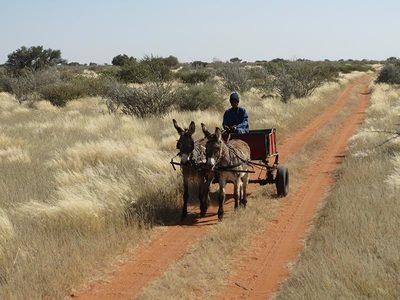
Namibia's lands minister Utoni Nujoma has reportedly tabled a bill that would see foreign nationals being barred from owning land in the southern African country.

Le gouvernement namibien vient de soumettre au vote du parlement le projet de la Loi foncière 2016, dont la mesure phare est l’interdiction aux étrangers d’acquérir des terres en Namibie.
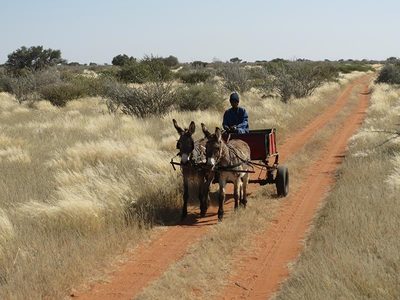
A total of 281 foreign nationals own 1.4 million hectares of agricultural land in Namibia, some in partnership with Namibians, Minister of Land Reform Utoni Nujoma revealed last week.

Russian billionaire Rashid Sardarov, who bought large tracts of land in Namibia, is among the long−serving clients of Mossack Fonseca, a disgraced law firm known for aiding the rich to hide their wealth in tax havens

The Namibian government has received proposals from multinational agribusiness to develop large-scale agricultural irrigation projects but only a few of have materialised or have been operationalised.
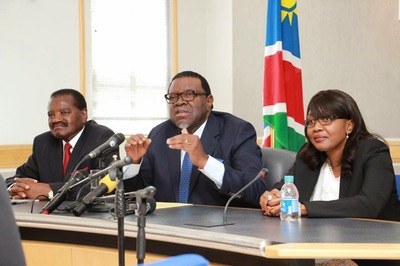
The Namibian government plans to pass a new land law that will ban foreigners from owning agricultural land, the country’s cabinet said.

Chinese companies are planning to invest in maize and tobacco farming in the Zambezi region of Namibia where the environment is very good and the land is fertile. The companies are now doing the preparatory work.

A group of Namibian youth activists have condemned their government’s intention to approve the lease of 10,000 hectares of fertile land to a Chinese company to grow tobacco for export.

Le projet de développement d'une ferme de gibier de 46 000 ha par l'oligarque russe Rashid Sardarov, près de Windhoek, perturbe un programme d'exploitation de fer dans la zone.
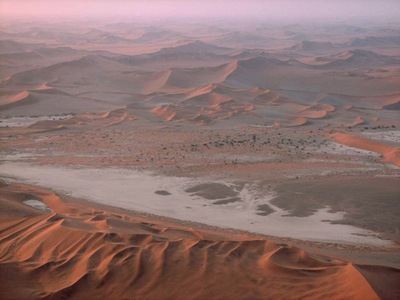
The arid nation of Namibia has a newly discovered aquifer called Ohangwena II, that spans its northeast region, which flows under the boundary between Angola and Namibia, and now the challenge of balancing profit with sustainability looms overhead.

On 31 January 2012 in Dubai, 2nd Commercial Farm Africa features panel of experts and in-depth analysis on land utilization & investment policies in Mozambique, Tanzania, Zambia, Sudan, Namibia, Ghana and Ethiopia.

African governments need to raise their level of accountability and ensure that they improve and protect their own food security through quid pro quo side-agreements negotiated when they lease or sell their arable land to foreign interests, says Keith Mullin of Thompson Reuters