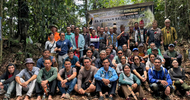
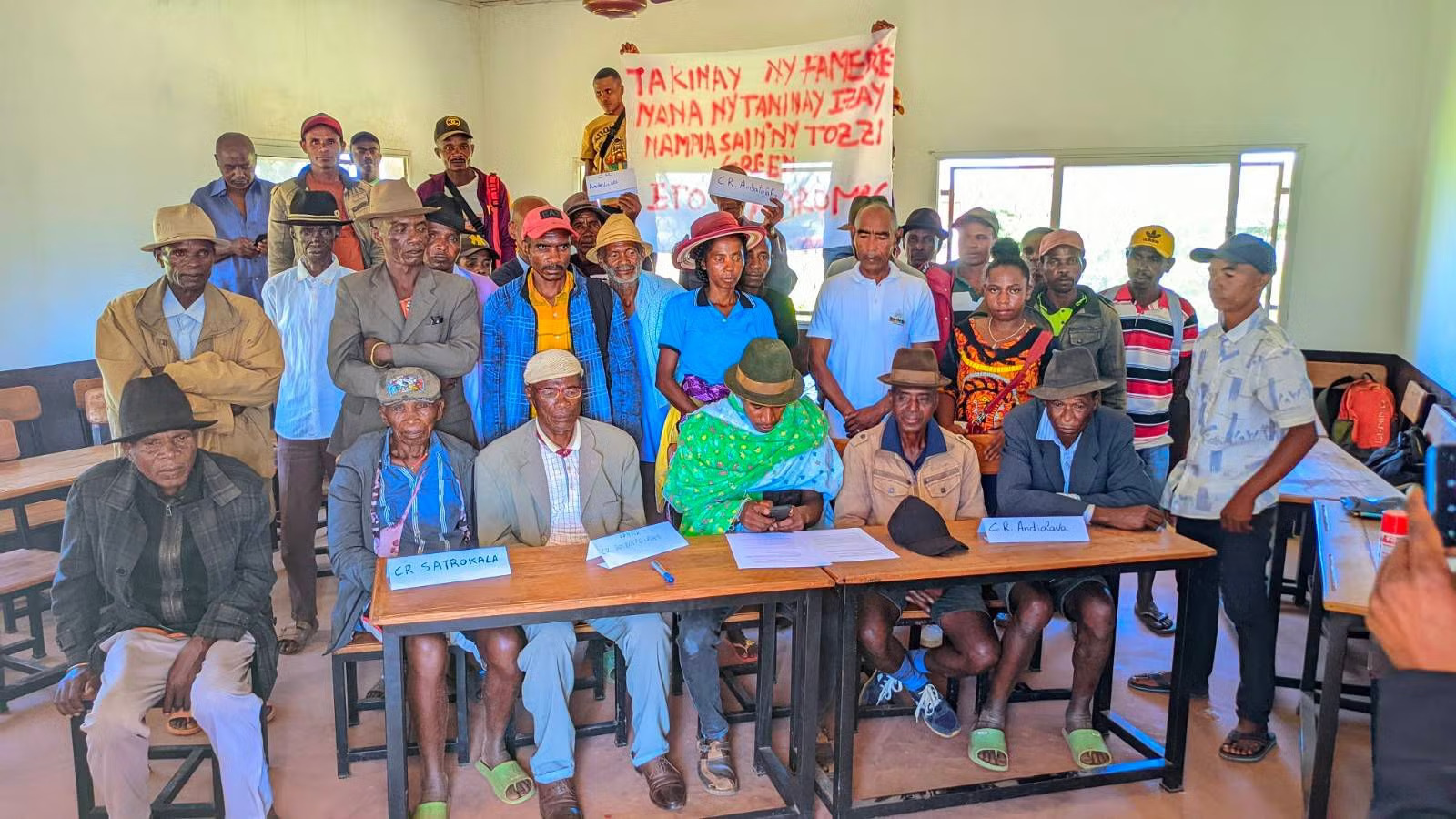
 Malagasy communities protest against the Italian company Tozzi Green. The banner reads "We demand the restitution of our lands which Tozzi Green is using". Photo credit: Comité de Défense des Terres IhorombeHufvudstadsbladet | 17 July 2026 [FR]
(This is a machine-generated translation of the original article in Swedish)
Finnfund is funding a controversial climate project in Madagascar
Organisations in Madagascar are accusing an Italian company of land grabbing. Finnfund, which is a co-financier, says that the local population’s situation has improved. The government is planning new legislation to strengthen Finnfund’s role in development work.
by Emma Strömberg
The development finance institution Finnfund, which is owned by the Finnish state, is providing funding to the Italian company Tozzi Green, which is planting trees in the Ihorombe region of southern Madagascar.
by Emma Strömberg
The development finance institution Finnfund, which is owned by the Finnish state, is providing funding to the Italian company Tozzi Green, which is planting trees in the Ihorombe region of southern Madagascar.
Despite protests from the local population, the Madagascan government has been leasing land to Tozzi Green since 2012. Finnfund became a financier in 2020 with an investment of 7.5 million euros, alongside the Belgian development finance institution BIO.
Livestock owners are protesting that the tree plantations are reducing grazing land, making it more difficult to manage their livestock. Furthermore, it has become harder to protect livestock from theft, as thieves can hide in the tree plantations.
“Tozzi Green promised improvements for the local population, including building schools and infrastructure and providing jobs for young people. But the company has not fulfilled all its promises and the local population feels cheated,” says Mamy Rakotondrainibe.
She is the executive director of the organisation Collectif TANY, which was founded in 2009 to combat land grabbing and the exploitation of natural resources in Madagascar.
They have approached Finnfund and the Belgian development finance institution BIO on several occasions to voice the local population’s dissatisfaction. Most recently, in December 2025, TANY and five other local organisations sent an open letter demanding that Tozzi Green relinquish the land it currently holds and refrain from expanding its tree-planting operations.
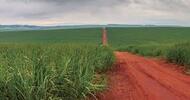
Ihorombe is one of the most sparsely populated regions in Madagascar, and the high plateau consists largely of vast grasslands where livestock have roamed freely. The local population traditionally makes a living from keeping cattle and growing crops for their own use. The zebu breed of cattle also plays an important role in local culture.
Local people have been subjected to pressure to approve the company’s operations in their area.
Land rights have long been a contentious issue in Madagascar. The island was once a French colony, and during that time colonial settlers took land from the local population. Following independence, a large proportion of the land passed to the Madagascan state. However, since the early 2000s, customary rights to land have also been recognised in law, meaning that those who have traditionally used the land have a right of possession over it.
In the case of Tozzi Green, the state has leased land over which the local population considers itself to have authority.
‘The local population has been subjected to pressure to approve the company’s operations in their area. The negotiating parties have not been on an equal footing,’ says Rakotondrainibe.
When Finnfund came on board as a financier, Tozzi Green’s project company, JTF Madagascar, was growing maize for animal feed and plants from which to extract essential oils for the export market. However, the crops failed due to drought caused by global warming.
Instead, the company began planting trees with the aim of selling carbon credits on the emissions market. Companies that generate carbon dioxide emissions can purchase these credits as a way of offsetting their emissions.
For this reason, Collectif TANY and the other local organisations also sent the open letter in December 2025 to Verra, which is a registry for carbon credits. Tozzi Green has applied to obtain their certificates and be included in their registry.
‘We also want to draw Verra’s attention to the fact that the land has been acquired without the consent of the local population,’ says Rakotondrainibe.
She explains that Collectif TANY contacted Finnfund as early as 2020, when the development fund began its collaboration with Tozzi Green. In 2024, too, TANY, together with other organisations and local leaders, sent an open letter to Finnfund and BIO.
– Finnfund has thanked us each time for getting in touch and said they would discuss the matter with the company. But nothing has happened. They have merely sent a polite reply without committing to anything.
Kaisa Alavuotunki, Director of Sustainability at Finnfund, says that it is extremely valuable for Finnfund to receive feedback and information from local organisations, even if they do not share the same view on every point.
– We have been monitoring the project company and have seen the tangible benefits it has brought. But we also understand that there are local tensions, and the company has been responsive to these.
Alavuotunki emphasises that it is important to maintain an ongoing dialogue to ease these tensions.
– Finnfund is in constant contact with Tozzi Green’s project company to ensure that the dialogue is working.
How does Finnfund view the reports that, in certain areas, JTF Madagascar has not fulfilled all its promises to build, for example, schools and infrastructure?
– We cannot speak on behalf of the company, and I do not wish to dispute people’s experiences. If people feel that not all agreements have been fulfilled, this is precisely the sort of issue it is important to discuss through dialogue.
|
Finnfund Owned by the Finnish state (96.64 per cent), Finnvera (3.3 per cent) and the Confederation of Finnish Industries EK (0.06 per cent). It provides financing to companies operating in developing countries, with the aim of contributing to positive economic and social development. The companies’ operations must also be environmentally sustainable. Finnfund finances the Italian company Tozzi Green’s project company in Madagascar, JTF Madagascar. Total investment: 1.2 million euros (by the end of 2025). Makes 20–30 new investments annually. Founded in 1979. |
When JTF Madagascar shifted its operations to tree planting, Finnfund assessed whether the project would benefit the climate, biodiversity and local communities. The answer was yes, and Finnfund therefore continued to fund the Italian company.
– Together with the Belgian development finance institution, we assessed that we had already had a positive impact on the company’s development and that we still have an important role to play.
How does the local population benefit from a foreign company planting forests with the aim of selling carbon credits?
– Verra’s report clearly highlights all the benefits that the company’s presence has brought. In addition to jobs directly linked to tree planting, the company has contributed to social development initiatives in the region, ranging from agricultural projects to infrastructure. For example, a health centre built by the company has recorded 40,000 free patient visits over the past 10 years.
According to Verra’s report, livestock owners are the only ones who oppose JTF Madagascar’s operations – not because they experience any negative impact, but because they are defending their grazing lands.
Researcher Jenni Mölkänen has carried out fieldwork at Tozzi Green’s tree plantations in Ihorombe as part of a larger research project on carbon credit trading.
Researcher Jenni Mölkänen has carried out fieldwork at Tozzi Green’s tree plantations in Ihorombe as part of a larger research project on carbon credit trading.
She notes that the case of Tozzi Green in Madagascar illustrates the conflicts of interest that can arise when the focus of development work shifts from traditional aid work to investment support for companies.
– The rules of the game change when the partner shifts from local civil society organisations to companies. A company’s ultimate aim is to generate profit for itself, whilst organisations have different objectives. This affects the kind of society that is built: who benefits and who does not?
The trend, both globally and in Finland, is for development aid to the Global South to decline. The decline is more drastic globally, but Finland’s current government has also cut aid in five rounds, totalling 1.5 billion euros.
We want to create good incentives for businesses.
At the same time, the government is planning a new law that will give Finnfund a clearer mandate to support Finnish companies in entering developing markets. Finnfund is to establish a subsidiary that will both play an advisory role and distribute state aid to Finnish companies to help them establish themselves in markets in developing countries.
Juha Savolainen, Head of Department at the Ministry for Foreign Affairs, says that the law itself does not mean that more state funds will be channelled into this type of business support. However, in a situation where development aid is being cut, it is important to review how these increasingly limited resources are being used.
– The private sector has a key role to play here. Globally, there are vast private fortunes seeking sound investment opportunities, and if we manage to direct even a fraction of these investments towards activities that promote sustainable development, it will be a huge help.
This is the background to the new bill that is soon to be presented to Parliament.
– We want to create effective incentives for businesses.
Alavuotunki believes that both traditional aid and the work carried out by Finnfund are necessary.
– Investing in businesses is an effective way of creating jobs and, in this way, helping people out of poverty and producing goods that benefit the population. However, there is a definite need for support for organisations that help vulnerable people who are unable to participate in the market, such as children, the elderly or people with disabilities.
Alavuotunki adds that one advantage of working within the framework of market dynamics is that the system can then finance itself: once Finnfund has helped to establish responsible business operations, it can sell its stake in the company and use the proceeds for new investments.