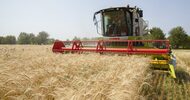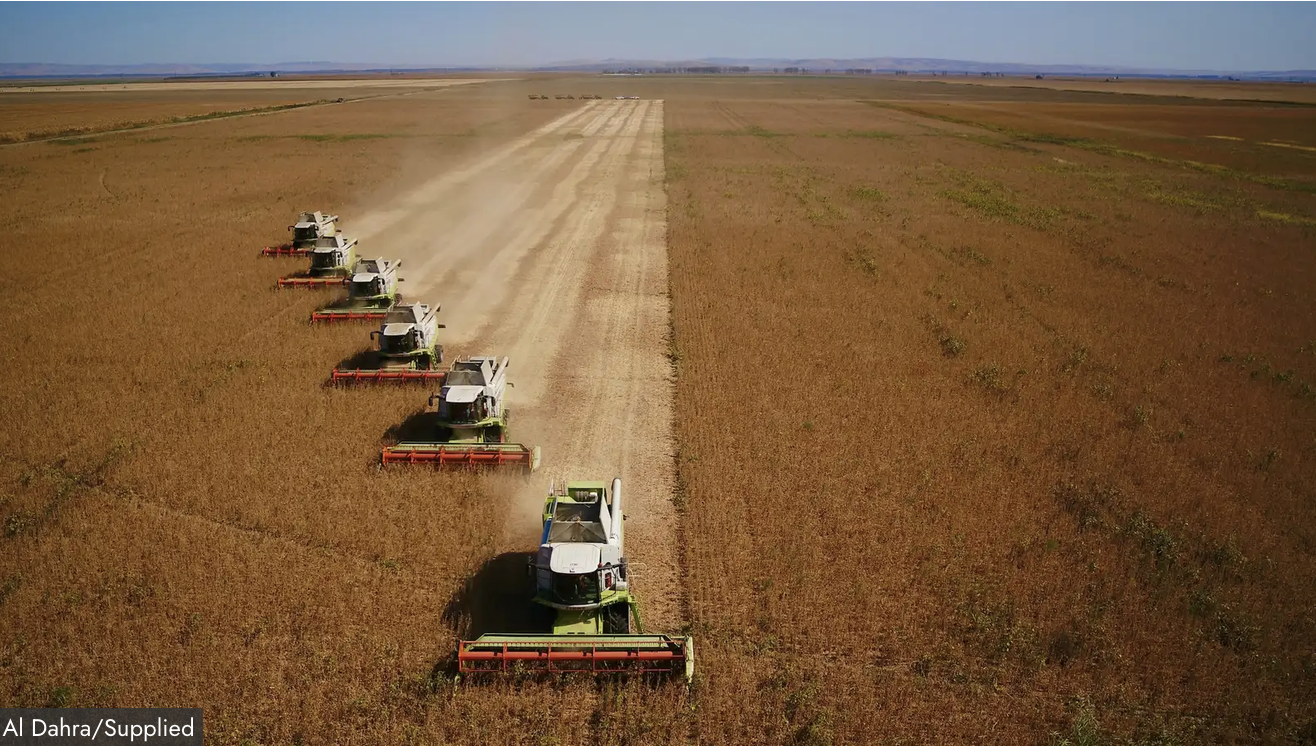
A Serbian farm run by UAE-based Al Dahra, which operates more than 100,000 hectares of agricultural land in Egypt, Romania, Serbia and the US Copyright: Al Dahra/Supplied
AGBI | 22 July 2026Food security may be the next casualty of war
By Shruthi Nair
Food logistics costs in the UAE have more than doubled during the Iran war, but the bigger threat to global food security is only beginning to emerge, according to the chief executive of a prominent UAE agribusiness.
Shipping disruptions across the Gulf have pushed up costs and delayed cargo for weeks, but the next casualty could be farmers themselves, he said.
Higher fertiliser prices, rising fuel costs and mounting pressure on farm margins are set to squeeze producers just as the next planting season begins, raising concerns about future supplies rather than immediate shortages.
For the Gulf, which imports the majority of its food, the conflict has reinforced the need for three lines of defence: produce locally where possible, invest in agricultural production overseas and maintain strong trade relationships with a wider range of countries, said Arnoud van den Berg, Group CEO of Al Dahra.
UAE-based Al Dahra operates more than 100,000 hectares of agricultural land in Egypt, Romania, Serbia and the US. It has relied on diversified farmland, long-term fertiliser contracts and alternative shipping and land corridors through Oman and Saudi Arabia to keep supplying customers across the Gulf during a difficult period for logistics and the supply chain.
Al Dahra crops in Egypt. The company was able to rely on diversified farmland, long-term fertiliser contracts and alternative shipping and land corridors to continue supplying customers across the Gulf
The company learned these lessons from the Red Sea shipping crisis of 2023-25 and the Covid-19 pandemic. Even so, those measures could not eliminate the bottlenecks.
“In Fujairah [port], we have a line of vessels that are unloading in the ports. And that line-up grew to one to two months of waiting times,” said Van den Berg.
Fujairah is the UAE’s eastern emirate, about 130km from Dubai, on the Gulf of Oman.
Companies have struggled to secure enough trucking capacity to move cargo inland, creating another layer of delays across the supply chain.
Fuel costs climbed sharply during the conflict, adding further pressure to logistics bills. Yet Van den Berg said the bigger concern lies elsewhere.
The world is heavily dependent on fertiliser exports from the region. While companies such as Al Dahra had sufficient safety stocks to weather the immediate disruption, that buffer is now running out.
“We’re not impacted to the full extent yet. But for the next planting season, starting in September or October, people will face heightened fertiliser prices,” he said.
The past four months have added significant financial pressure on farmers globally, who may now be running out of the cash reserves that have kept them going.
Despite higher production and transport costs, food prices have remained relatively stable. Roughly 80 percent of global food volume runs through just seven or eight commodities – including wheat, rice, corn – and prices on those staples have not meaningfully moved in a decade, even through years of broader inflation, Van den Berg said. That has left farmers absorbing much of the financial pain.
“The only possibility there is, either farmers don’t make any money, but the best way is to become a better farmer. If you can produce more output from the same land with the same machinery, with the same people, that’s the way that we cover for that,” Van den Berg said.
Improving productivity through technology, mechanisation and economies of scale can offset rising costs for large-scale agricultural operators, but smaller farms have fewer options.
Al Dahra said its largest farm in Romania produces more than twice the output of an average Romanian farm, illustrating the widening productivity gap between industrial-scale agriculture and smaller producers.
“We will focus on large scale, build on the latest technology and sustainable farming. It’s often a struggle for smaller farms to keep up with that type of development,” Van den Berg said.