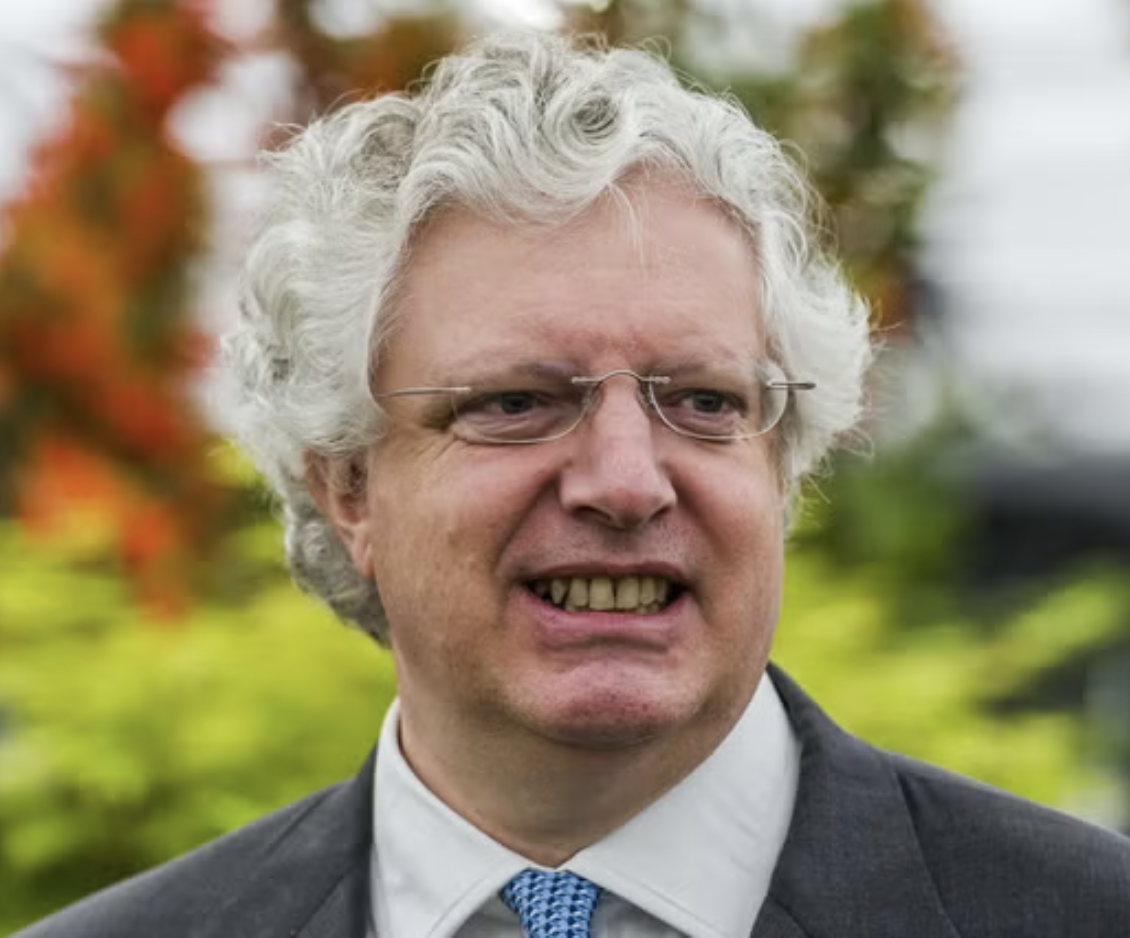
 Consolidated Pastoral Company, backed by UK-based private equity investor Guy Hands (above), has surged four places to No. 2 on the landholder rankings, with a 6.97 million-hectare footprint across Queensland, the Northern Territory and Western Australia – roughly the size of Ireland.The Weekly Times | 24 August 2026
Who owns Australia’s farms: Meet the biggest investors
by Tallis Miles and James Wagstaff
American academics, Canadian cops, Bahamas-based billionaires and some of Australia’s wealthiest families are battling for control of vast tracts of the nation’s farmland.
A News Corp investigation into Australian farm ownership reveals cashed-up pension funds from North America and Europe, billion-dollar investment firms, leading farm dynasties and some of Australia’s best-known business identities continue to pour money into agriculture, amassing portfolios that rival the size of European countries.
Central Australian pastoralists and mates Viv Oldfield and Donny Costello have retained their title as the nation’s biggest landholders, with properties held both within and outside of their Crown Point Pastoral partnership in Central Australia spanning a staggering 9.5 million hectares.
Their combined footprint is bigger than Portugal, at 9.22 million hectares, and Hungary, at 9.3 million hectares.
Consolidated Pastoral Company, backed by UK-based private equity investor Guy Hands, has surged four places to No. 2 on the landholder rankings, with a 6.97 million-hectare footprint across Queensland, the Northern Territory and Western Australia – roughly the size of Ireland.
CPC has added more than 2.7 million hectares over the past year through the acquisition of three large sheep and cattle stations, with another 314,000-hectare West Australian sheep property awaiting regulatory approval.
Its rapid expansion has pushed the iconic Australian Agricultural Company into third place, with 6.62 million hectares across Queensland and the Northern Territory. North Australian Pastoral Company follows with six million hectares, ahead of South Australia’s Williams Cattle Company at 4.65 million hectares.
By value, Canadian pension giant PSP Investments remains the clear leader, with an estimated $8.5 billion portfolio.
PSP manages the retirement savings of Canada’s public servants, defence personnel and members of the world-famous Royal Canadian Mounted Police. Globally, it has the equivalent of about A$326 billion in assets under management, with its Australian agricultural interests spanning cropping, horticulture, dairy and livestock.
Macquarie Asset Management ranks No. 2 with about $4 billion in assets, although its position remains subject to negotiations over the proposed sale of the 4.48 million-hectare Paraway Pastoral Company, assembled over the past 18 years. Dutch pension asset manager APG is a major investor in Paraway.
New York-based Fortune 100 pension giant TIAA ranks third through its Nuveen Natural Capital business, with about $3 billion invested in Australian agriculture, predominantly cropping and horticulture across five states.
Other significant players include Australian fund Warakirri with about $2.5 billion in assets, followed by rich-lister Gina Rinehart’s Hancock Agriculture and S Kidman and Co businesses at about $2 billion.
The nation’s 10 biggest farmland control a combined $28.5 billion in agricultural assets, with nine having some form of foreign backing.
The ownership list also reads like a rollcall of Australian business royalty, featuring the Holmes a Courts, Packers, Murdochs, Stokes, the Lees and Paspaleys. Foreign-based richlisters Ray Dalio, Urs Schwarzenbach, Brett Blundy and Baron Michael Hintze are also prominent.
LAWD senior consultant and rural property transactions specialise Danny Thomas said the farmland market had increasingly split across north-south lines over the past 12 months. In northern Australia, “the big beef families have been resurgent and very active”, increasingly looking beyond breeding and fattening country to post-farmgate assets such as feedlots.
In southern Australia, institutional investors – many with “a natural capital or carbon flavour” – are dominating activity.