 Econfin Agency | 1 September 2026
UK's Asset Green adds Ghana poultry deal to African farm push
Asset Green's agrifood arm, Agrium Capital, joined a $270 million poultry-industry agreement in Ghana signed on Aug. 28, spanning feed, hatcheries, farming, processing, cold chain and distribution.
The deal brings Asset Green's announced African agrifood projects to three since February 2025 Ghana, Nigeria and Ethiopia worth a combined $1.366 billion.
All three target markets where local supply falls short: Ghana imports about 270,000 tonnes of chicken a year, at roughly $400 million.
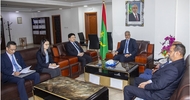
Agrium Capital, the agrifood subsidiary of British private-equity firm Asset Green, has just committed to a poultry-industry investment in Ghana. On Monday, Aug. 28, the company took part in signing a framework agreement that involves the Ghanaian authorities and other partners, notably the Tony Blair Institute — which advises on governance — along with Petra Pension Trust and Axis Pension Trust, two Ghanaian pension-fund managers.
The project, with an announced total cost of $270 million, will cover several links in the value chain, including poultry-feed production, hatcheries, commercial farming, processing, cold-chain infrastructure and distribution. According to the Ghana News Agency (GNA), the partners will develop it through an exclusive design-and-development process expected to run 10 to 12 months.
This Ghanaian operation recalls similar investment approaches Asset Green has recently pursued in other African farm sectors, namely Nigeria and Ethiopia.
A confirmed African investment strategy
In Africa's most populous country, Asset Green signed a memorandum of understanding on March 18 with the Nigeria Sovereign Investment Authority (NSIA) for a $496 million integrated dairy project. In concrete terms, the project plans an agro-industrial complex with 20,000 hectares of fodder crops and a modern farm able to hold 10,000 dairy cows. It will also include a processing unit with an annual capacity of 200,000 tonnes, set to produce fresh milk, butter, cream and powdered milk.
A little earlier, in February 2025, the British group struck a deal in Ethiopia with Ethiopian Investment Holdings (EIH) and the Ethiopian Agricultural Business Corporation (EABC) to develop an integrated dairy and commercial-crop project valued at $600 million. That project plans a modern dairy farm across 15,000 hectares, with a first phase devoted to livestock and animal-feed production. A second phase will extend activities to cotton, oilseeds and rice.
With the Ghana project now announced, Asset Green counts three agrifood projects unveiled in Africa since February 2025, across three markets and several farm segments. Their combined value reaches $1.366 billion, subject to the programs actually materializing.
Deficit markets that offer investment openings
Beyond the differences among the segments they target, these three operations share one common feature: they land in markets where local supply still falls short of demand and where governments seek to reduce import dependence.
In Ghana, for instance, official data put chicken-meat consumption at close to 340,000 tonnes a year, while imports reach nearly 270,000 tonnes, for a bill estimated at about $400 million annually. In Nigeria, the dairy industry faces a similar challenge. The country's local output covers less than 40% of consumption, which the FAO estimates at nearly 2 million tonnes of dairy products a year. According to the UN body, Nigeria imported close to 103,000 tonnes of dairy products worth about $317 million in 2024 to fill its production gap.
In Ethiopia, local output likewise fails to cover the market's needs, which pushes the country to rely on imports. According to the FAO, Ethiopia imported an average of nearly 7,400 tonnes of dairy products a year between 2020 and 2024. Over that period, the bill for these purchases averaged $23 million a year.
These deficits thus give Asset Green markets where building local production, processing and distribution capacity can meet demand that already exists.
Stéphanas Assocle