 The AgriBiz | 13 October 2026
Brazil farmland deals slow as buyers await recovery
Radar’s land sales to SLC Agrícola and Bom Futuro, agreed in two separate transactions totaling $371 million (1.85 billion reais), were Brazil’s only billion-real farmland divestment announced through September 2026.
Buyers are more selective amid tight credit, high interest rates, election uncertainty and El Niño risks, said Daniel Meireles, managing partner at farmland consultancy Acres.
The contrast with 2025 is stark. The AgriBiz tracked at least $1.92 billion (9.6 billion reais) across 19 transactions last year, mostly involving grain-producing properties, alongside deals in forestry for pulp production and cattle ranching.
Cash Pressure
The transactions reflect a meeting of financial needs: sellers seeking cash or debt relief and buyers looking for discounted assets.
Radar, the farmland business in the Cosan group, sold properties to raise cash for its controlling shareholder. Existing tenants were offered assets and secured below-market prices.
Smaller transactions have continued. Farmland investment manager AGBI bought the Rincão Alegre farm in Gaúcha do Norte, in Mato Grosso state, for $18 million (90 million reais).
In late September, BrasilAgro sold 2,500 hectares (6,175 acres) of its Rio do Meio farm in Correntina, Bahia state, for $15.8 million (79 million reais). It was the farmland developer’s only announced sale of 2026, ending its longest-ever deal hiatus.
Sale-and-leaseback transactions have been more active, though tickets are smaller. Funds provide liquidity by purchasing farms from owners who then sign a land lease to continue operating the properties.
Other proposed deals have fallen through. JBJ Agropecuária abandoned its acquisition of Fazenda Conforto, a transaction valued at about $200 million (1 billion reais), according to Brazilian agribusiness news outlet AgFeed.
Al Dahra, the Abu Dhabi-based agribusiness backed by sovereign investor ADQ, has also abandoned plans to buy Brazilian farmland, according to people with knowledge of the matter previously cited by The AgriBiz.
Returns and recovery
Acres’ two large sale mandates include an established 20,000-hectare (49,400-acre) operation in Rondônia, now being marketed with an estimated annual return of 6% on invested capital.
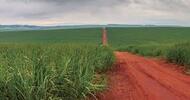
That tops São Paulo sugarcane and Mato Grosso do Sul forestry returns; sugarcane buyers expect 3% to 5% annually in São Paulo, Meireles said.
Other talks involve 12,000 hectares (29,640 acres) in Maranhão and 10,000 hectares (24,700 acres) in Mato Grosso do Sul.
Meireles sees potential decisions after October, when fiscal and monetary policy may clarify project costs, risks and financing.
Higher commodity prices have helped sentiment, but margins must improve. Half-price farms remain rare.
“The idea is to repay debts from production, not from assets,” he said.
Discounts could narrow as conditions improve.