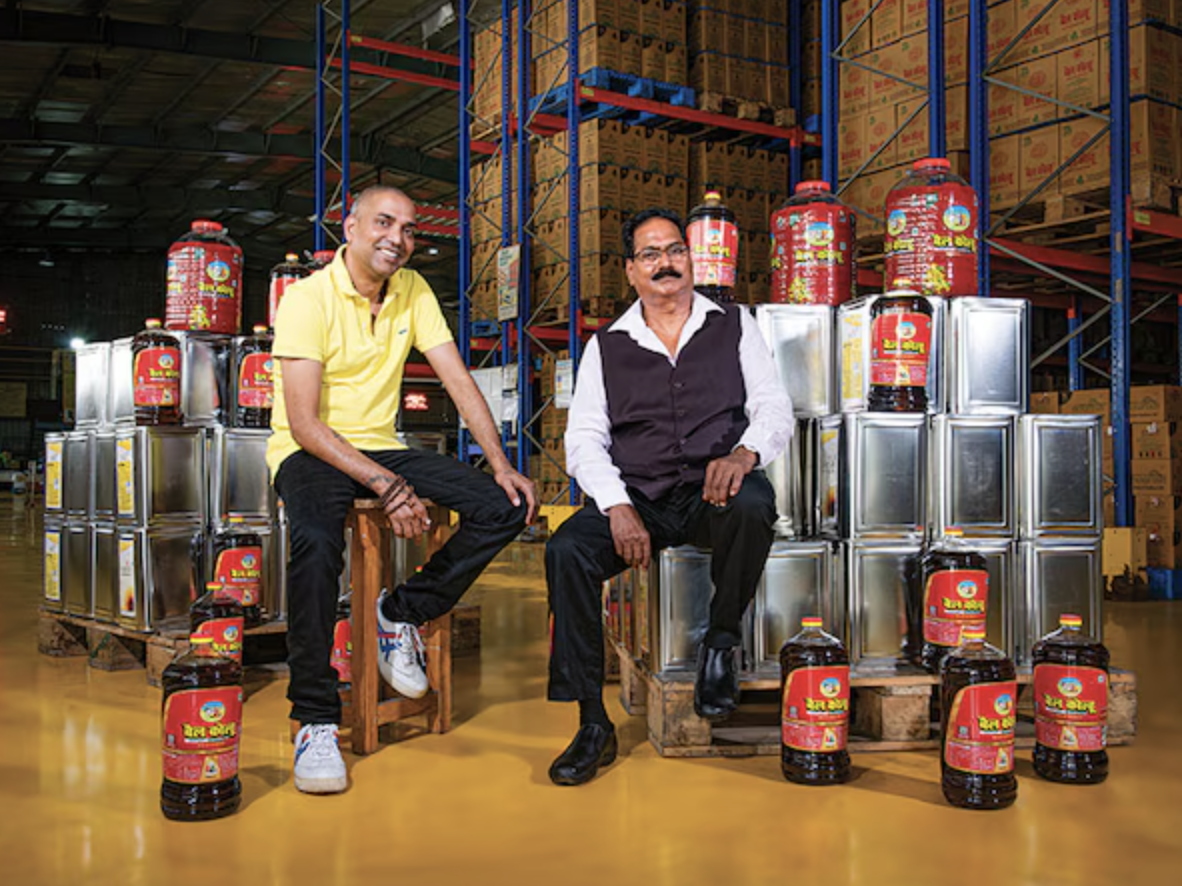
 (From left) Ashish Khandelwal, managing director, and Ghanshyam Khandelwal, chairman of BL Agro at the Bail Kolhu packaging plant in Bareilly Image: Amit Verma
Ecofin | 23 October 2026
Tanzania: Indian firm plans $739 million push into agriculture
Indian food company BL Agro plans to enter the Tanzanian market, where authorities have offered it long-term leases on approximately 700,000 hectares of farmland. The company's managing director, Ashish Khandelwal, discussed the plans in an interview published by ETRetail on Thursday, October 22.
Nearly $740 Million Investment Planned
BL Agro plans to invest 70 billion rupees ($739.1 million) in Tanzania over the next 10 years, with investments concentrated in three areas. Its first project will be a vegetable oil processing complex costing an estimated 15 billion rupees.
According to Khandelwal, the facility will include oilseed crushing, solvent extraction and refining units, with a planned processing capacity of 1,100 tons per day. The company intends to source oilseeds from local farmers while growing crops on its own farms.
BL Agro plans to invest another 20 billion rupees in cattle breeding and 15 billion rupees in agricultural infrastructure, including local manufacturing of tractors and other farm equipment. Beyond oilseeds, the company intends to grow other crops for export, particularly vegetables.
"We are trying to replicate a similar model in Tanzania to what we are doing here in India," Khandelwal said.
Opportunities in Tanzania's Agricultural Market
The planned expansion would allow BL Agro to extend its operations beyond India. It could also help Tanzania bring more farmland into production and expand domestic food processing capacity.
Tanzania's edible oil shortage offers BL Agro an immediate market opportunity. In August, Tanzania's Ministry of Agriculture estimated annual domestic demand at approximately 733,000 tons, compared with local production of nearly 306,000 tons. Tanzanian authorities are working to increase oilseed production and processing capacity to reduce reliance on imports. BL Agro's proposed processing complex could increase domestic supply and provide additional buyers for locally produced oilseeds.
Tanzania's push to mechanize farming could also create opportunities for BL Agro's planned equipment manufacturing operations. In February 2026, the government launched a national strategy covering 2026-2036 that includes plans to acquire 10,000 tractors and establish 1,000 agricultural mechanization service centers. The initiative is intended to improve farmers' access to equipment and increase agricultural productivity.
Much of Tanzania's arable land remains uncultivated. According to official figures reported by Ecofin Agency in February, Tanzania has approximately 44 million hectares of arable land, of which nearly 10.8 million hectares, or 24%, are currently under cultivation. Greater mechanization could help bring more land into cultivation, although expansion will also depend on access to inputs, water and infrastructure.
BL Agro estimates that its projects could create approximately 100,000 jobs in Tanzania across farming, food processing, manufacturing and related activities. The company expects its Tanzanian operations to begin generating significant revenue around 2030.
Stéphanas Assocle
---
Milling Middle East & Africa | 24 October 2026
TANZANIA – Indian food and agribusiness company BL Agro Industries plans to invest approximately US$740 million (₹70 billion) in the country over the next decade, marking its first major international expansion.
The proposed investment will cover edible oil processing, agriculture, dairy, animal husbandry, research, and manufacturing, aiming to develop an integrated food production ecosystem and establish Tanzania as a gateway to the wider East African market.
Headquartered in Bareilly, India, BL Agro plans to prioritize edible oil production, capitalizing on Tanzania’s significant sunflower and oilseed potential.
According to the company, its first major project will be a vegetable oil complex involving oilseed crushing, solvent extraction and refining facilities.
The plant is planned to process approximately 1,100 tonnes of oilseeds per day and is expected to become operational within three years, subject to the necessary approvals.
The initial oil processing project is estimated to require an investment of about ₹15 billion (US$158M).
BL Agro plans to source oilseeds from local farmers while exploring its own cultivation operations to strengthen raw material supplies.
The initiative could increase domestic processing capacity, create additional market opportunities for sunflower producers and reduce reliance on imported edible oils.
Beyond oil processing, the company plans to invest about ₹20 billion (US$210.6M) in cattle breeding and livestock development over seven years.
It has earmarked a further ₹15 billion (US$158M) for agricultural infrastructure, including potential local tractor manufacturing and other farming-related activities.
The company is also exploring vegetable production and other export-oriented agricultural opportunities.
BL Agro’s expansion follows a visit by a five-member company delegation to Tanzania, where representatives met with government officials and other stakeholders to discuss investment opportunities and project implementation.
The proposed investment also coincides with Tanzania and India’s efforts to strengthen bilateral trade and economic cooperation.
Ashish Khandelwal, managing director of BL Agro, said Tanzania offers considerable opportunities to improve agricultural productivity through Indian technology, processing expertise and long-term partnerships.
The company is also considering cooperation with local farmers through contract farming and agricultural supply-chain development.
The proposed projects are expected to create about 100,000 jobs across farming, food processing, manufacturing, and related activities.
BL Agro anticipates that its Tanzanian operations will begin contributing meaningfully to revenue around 2030.
The investment forms part of the company’s broader international growth strategy, which seeks to combine local agricultural resources with modern processing capabilities while expanding its presence in East Africa.
However, the investment remains a planned, phased programme, with implementation dependent on project approvals and development timelines.