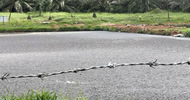
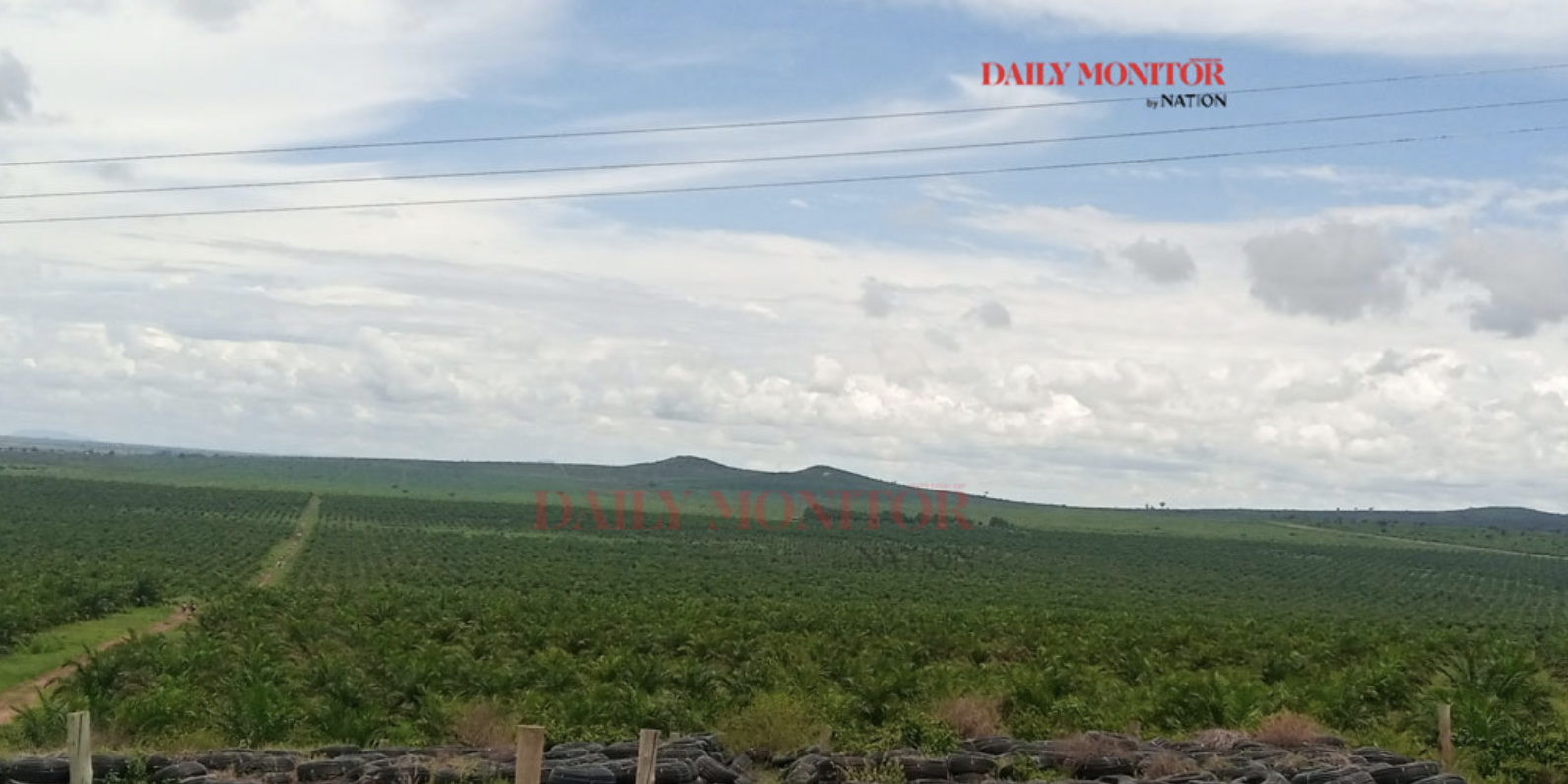
 Hillside Agriculture Ltd taps water from River Nile to irrigate its oil palm plantation in Akokoro Sub-county in Apac District. PHOTO/BILL OKETCHDaily Monitor | 18 April 2025
Locals benefit from Apac oil palm project despite growing challenges
By Bill Oketch
An oil palm project in Akokoro Sub-county, Apac District, is creating employment for hundreds of youth across northern Uganda, though farmers have yet to embrace cultivation themselves due to challenges accessing seedlings.
The plantation, operated by Hillside Agriculture Ltd, employs over 250 young people from Apac, Lira, Kwania, Kole, Pakwach, Bulambuli, and Kiryandongo districts.
The company was granted a 50-year lease in 2019 to grow oil palm on 54 square kilometres of Maruzi Ranch. Under a government agreement, 10 square kilometres were set aside for community use.
However, not a single farmer has planted oil palm, largely due to the lack of seedlings.
“Raising seedlings takes at least one-and-a-half years before they can be transplanted,” said Ravi Kumar Konali, the plantation manager. “What we have now is only for our plantation, but we are discussing with management about producing more for local farmers.”
He urged government support to help farmers raise seedlings, warning that without assistance, few would join the venture.
Maruzi North MP Nelson Okello praised the company’s impact but called for greater inclusion of local outgrowers.
“If they are brought on board now, they will have learned enough by the time full production begins,” he said.
General Manager Renga Nathan confirmed that harvesting has started and a milling plant is in place. “We conducted our first test run and expect to begin full production after the June-July harvest,” he said.
During a site visit on April 16, Dr Kenneth Omona, the Minister for Northern Uganda, warned that oil palm farming may not be feasible for many in the north, especially in post-conflict regions with poor water retention.
“Unless farmers can irrigate, this may not be practical,” he said. “Oil palm requires substantial resources. Those without capacity risk heavy losses.”
He urged leaders to guide locals carefully, noting that areas like Kalangala benefit from more favourable rain-fed conditions. “Here, every plant has an irrigation pipe — like farming in a desert,” he added.
While oil palm has helped Uganda reduce edible oil imports and boost domestic supply, nationwide production still falls short. In 2023, Uganda produced 80,000 metric tonnes of edible oil against a demand of 120,000 metric tonnes.
Agriculture Minister State Fred Bwino Kyakulaga has said oil palm expansion, including private ventures like Hillside’s, could help close the gap and save Uganda over $290 million annually in import costs.